
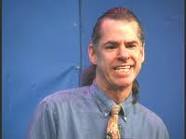
Norm Kunc| What’s Your Credo?
Every day people challenge me:
Why do I believe what I believe?
What’s wrong with the Medical Model?
What’s wrong with the Charity Model?
What’s the big deal about “normalization” and “inclusion”?
Why is “special” not special?
Most times the conversations are stressful–the whole paradigm shift thingy. Most people don’t want to take the time to understand or learn a whole new way of looking at the world. They think their view of the world is just fine, thank you very much.
As parents, we have been learning for 30-40 years, our child’s whole lifetime. Our child demands we still learn every day.
For the next couple days, I’m going to be sharing some of the people who shaped my beliefs. Here is Norm Kunc.
I am hoping they can deliver the message of “normalization” far better than I ever could.
Norm Kunc changes lives.
I would spend the whole year teaching university students and teachers about the need for inclusion, normalization, self-advocacy, people first… and they would nod their heads (or scratch their heads at the crazy lady), pass their tests, and go on with the way they always did things.
Norm Kunc came to campus, spoke to these same students and in fifteen minutes–he rocked their world.
That quick–his message is that powerful.
Here is Norm and Emma Kunc’s website. I’ll write more about them in another post, but if you get a chance book them or attend one of their presentations. It will change your life.
Here is Norm’s Credo of Support. It is not the same as hearing him in person, but the video message shows the power of words and the talents of self-advocates. When Norm introduces the video he says the words just poured out of his heart.
Here’s hoping it touches your heart too.
Keep Climbing: Onward and Upward
All my best,
Mary
Talk about it!
What did you think of the Credo of Support? Do you think the message is stronger coming from self-advocates? What is your personal credo? Can you think of ways people with disabilities can give their own message?
Would you like to hear more about Norm and his wife Emma’s work?


Love it! – should show this in every school at every grade level. I think we (as a society) need to cultivate a practice of respect for people with differences.
The questions for me and we’ve brought this up before on CEM) is how do we do this is an environment where, for the last 100 years, behavioralism for the benefit of the few is the mechanism of our society.
But you’re right, the only real remedy is to go out in real life and meet with, talk with, and experience first hand how others live.
I am forever grateful that my elementary school in the early 80′s did a training day for the “regular” students when they started classes for the
special students. The teachers came in and we had a fun assembly where the new special teachers taped up our fingers, blind folded us – and otherwise impaired us — It really was fun sensitivity training. Anyway, they only did that once and that’s a shame. But it think it’s a good practice – the zen of buttoning a shirt with no thumb!
Anyway, sorry to ramble. Thanks for the post Mary. Cheers!
HI Leigh, you don’t ramble, you brought up some great points. I wish everyone would also see this video. I used to love the one with the music from “Mission” but I love hearing and seeing the people tell the story better.
You reminded me of a friend, Nancy Kayes made a program called “Everybody counts” it was a wonderful introduction to people with different labels. Hope they are still using it.
In my kid’s school they do this too. And again it’s for a day or so during first grade and then not again.
However, I was struck by how this experience set them up for a difficult life lesson when a 7yo classmate was enduring chemotherapy and unable to walk visited in a wheelchair one day. How sensitive the kids were, how accepting and openly curious they were of her changed facial features, her lost hair and weak limbs. They were prepped for the experience and debriefed afterwards giving them plenty of time to think through the whole experience both from their perspective *and hers.* She sadly lost her life and we had more sessions processing that experience too. These inclusion lessons come to us from many angles.
Alison Golden recently posted..Warrior Woman Wrap-Up- One Year Ago
I think a HUGE part of others not grasping the concepts of inclusion and normalization, is that their minds aren’t open enough to accept it. Most will never encounter another person like Aaron, and if they do, they avoid the situation so they don’t really ever understand, and it’s sad to miss out on him! Have you checked out the National Inclusion Project? I looked at it after Clay Aiken was on Celebrity Apprentice and I had no idea he had founded a non-profit to get children with disabilities included with others. I’ll have to think a little bit longer about how to get others to open up and to help you explain normalization. Here is the website for the National Inclusion Project http://www.inclusionproject.org/level_2.php?id=16
Hi Jeanie,
I just checked out the INclusion Project and it looks great. I liked their facebook page and signed up for their newsletter.
You are right that Aaron has a personality and unique gifts that others would miss if they have poor attitudes and stereotypes. When caring people treat Aaron like an adult–he acts like one. If they baby him or do things for him, he can do for himself, then he loses skills and his self-dignity. Attitudes are everything.
Thanks for being one of those caring people and treating Aaron like an adult. We need more people like you.