by Mary E. Ulrich | Jun 25, 2024
Tale of Two Brothers: Sibs of People with Disabilities
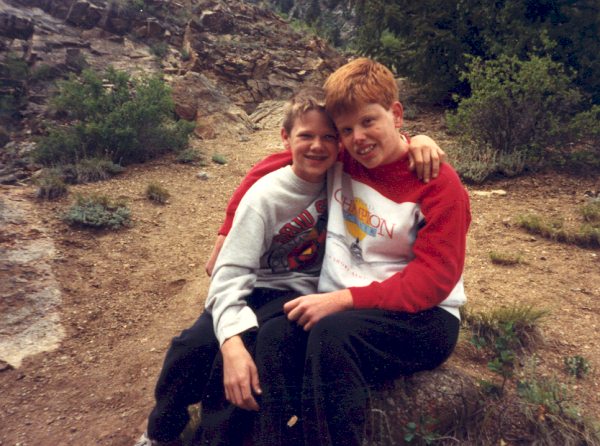
Tommy and Aaron hiking in Smokies
It was the best of times and the worst of times. (Sorry, couldn’t resist.)
All boys and girls grow up into adults. If the statistics are correct that one in 86 children now have the label of autism–that’s a lot of brothers and sisters.
The cute little brothers on the hiking trail grow into … what?
Can the brothers and sisters of people with disabilities, including autism, stay close and involved in their sibling’s life? How does it change over time? Can anyone have a “normal” life?
When we first suspected something was wrong with Aaron we went to the neurologist and began tests. We told him we were considering having a second child and he said, “Great, Aaron would love to have a brother or sister.” The tests took 6 months and fortunately for us, we were already pregnant when the neurologist told us Aaron would, “always be in special schools.” (which was his way of saying Aaron had cerebral palsy and was “severely retarded”–though at the time we didn’t know what he meant.) Tommy is 18 months younger than Aaron who later added autism to his list of neurological labels.
I can’t imagine our lives without Tommy. I think God knew our family needed him to help us get through the rough spots. He is a very thoughtful quiet guy, who is one of the most caring people on the planet. He is also a terrific problem solver and continues to be such a source of joy and support to Aaron and all of us.
Aaron is now 49 and Tommy is now 47, but in this picture (Aaron 10 yrs) and Tommy (8 yrs) pose on one of the hiking trails in the Great Smoky Mountains. Sometimes our whole family would go on the hikes, sometimes Tommy and his dad, Tom, would hike and spend a couple of nights on the trail while Aaron and I stayed in the base camp.
Thankfully Aaron let me use him for an excuse so I wouldn’t have to hike 10 miles up the mountain, sleep on the ground worrying about bears, and shovel the … you know. Sometimes it was just Aaron and me roughing it in the popup camper. Sometimes my dad or sister Janet joined us at basecamp. It was always a great family adventure (click here).
Tommy has always been involved in Aaron’s life. Until he went to college, they went to school together and participated in some extracurricular activities together. He certainly had his own friends and activities, but Aaron was involved in his life whether it was cheering at his baseball games, watching him play video games, or building stereo speakers….
In the last several years Tommy’s job, as a radio frequency engineer, has taken him to South Carolina, North Carolina, Pennsylvania, Virginia, and D.C. (Did I mention he was in charge of setting up the cell phone operations for NASCAR and the Super Bowl?) 🙂
He recently moved his family back to Cincinnati and is now living between Aaron’s house and our house so we get to see his family almost every week.
Because Tommy has grown up with Aaron, he knows what Aaron likes and dislikes–sometimes even better than Mom.
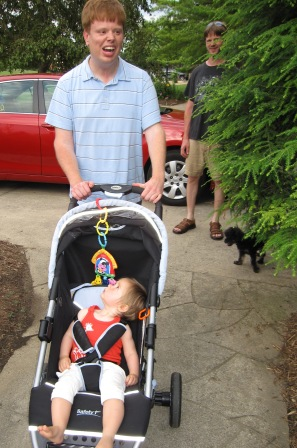
Aaron pushing Isabella in the stroller
Tommy invited us all to his house yesterday and his wife Ana fixed an amazing dinner. Isabella (1 year old) was climbing on Aaron and making him laugh.
Dignity of Risk
Tommy is now an adult who understands the “dignity of risk” (click here) and lets Aaron share his life with his family. Notice that while Aaron is pushing Isabella in the stroller, Tommy is hiding in the bushes making sure everything is okay.
Aaron can independently push Isabella and talk to her (why she was looking at him). He is using his skills. But Tommy is close by. Isabella enjoys her ride with Uncle Aaron and is safe.
I could not have planned for this special moment. I did not have a lesson plan or task analysis. Tommy just figured it out.
What a great brother.
LIFE IS GOOD!
Another Quote:
I remember reading an article where one brother of a person with a severe disability said, “Growing up was like being an only child, with a brother.” When I asked Tommy about this, he was very thoughtful and just nodded.
by Mary E. Ulrich | Jun 20, 2024
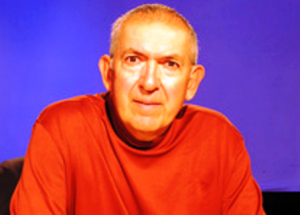
Dr. Lou Brown
What is a Life Space Analysis?
Most of us spend our lives trying to squeeze in just one more email, appointment, phone call, or … We dream of the day we can have nothing to do. But is that really what we want?
Twenty-five years ago in 1984, Dr. Lou Brown et al. of the University of Wisconsin-Madison developed The “Life Space Analysis” which has similar exercises to the 168 hours book. Is this a coincidence?
When people ask me, “What’s the purpose of the lives of people with severe disabilities?” (Like why should we let them live and use up our resources?) I have many responses (depending on my mood and who they are…) but sometimes I will answer: “People with autism and severe disabilities can take the complicated out of life. We can see life’s secrets because they help us think about basic truths we don’t usually think about.”
I think this is the beauty of the “Life Space Analysis.” It makes us see what a person with autism’s life actually looks like. It gets to normalization (click here) and core values:
* Is it important to know how each person spends their day?
* Is it important to have a circle of friends and a variety of people in our lives?
* Is it important that people get to go into the community and are not in one room for 24 hours, 365 days a year?
* Does a person with severe intellectual disabilities, autism, and/or other developmental disabilities know the difference?
Life Space Analysis
The Life Space Analysis evaluation tool looks at the 24 hours in the life of a person with autism and/or disabilities:
* What was the person doing every 15-30 minutes?
* Who else was with them?
* Where did this take place?
* Does this schedule stay the same every day and weekend?
For more information on this topic read the transcript of a presentation by Dr. Brown (click here).
Over the years, this has been a useful evaluation tool for my son Aaron who has the label of autism and severe disabilities.
When I wanted to show exactly how my son Aaron’s day consists of mostly sitting on the couch, licking books and repeating “You Okay?”, I’d get a consultant to conduct an ecological assessment using the Life Space Analysis. We’ve had some great consultants over the years: Alison Ford, Patrick Schwartz, and Wade Hitzing, as well as some local folks.
School Environments
When Aaron was school age, the “what, where, who” was pretty normal: a licensed teacher had the responsibility for planning Aaron’s day around a curriculum and his IEP goals. There was a process, accountability, best practice standards, and a qualified team to make things work.
There was the normal rhythm of the school environment: bus rides, classes, and specials like gym, art, and music. There was the lunchroom, students in the halls, lockers, homeroom, weight training, therapy, and vocational job training around the school and in the community…
We had an excellent functional curriculum that looked at Aaron’s domains (click here). There were also after-school activities like basketball games, track, and cross-country…
There were meaningful activities that filled the day, there were people who knew Aaron for a long time and had expectations that he grow and learn, and there were many rooms–spaces in the school, home, and community. When Aaron was in school, he was on no medications.
Lou Brown used to say, “The more rooms, the more people in a person’s life–the more interesting that life will be.”
Adult Environments
Last week when my husband Tom and I were taking the tours of possible adult day programs for Aaron. One of the things we instinctively looked for was the “who, what, and where.” What was the number of rooms? The number of people? and, What was happening in each of these environments? All the components of the Life Space Analysis.
Our “Life Space Analysis”
We went through several places, but here is the last center we visited:
The woman giving our tour had worked with Aaron 10 years ago when he was in transition from High School. She was a trained teacher and job coach. It was a vocational job and Aaron had a great experience. We were thrilled this woman might be back in Aaron’s life. She would know what he was like before he started to lose his skills and regress. Maybe she would be our ticket to getting Aaron a day filled with meaningful activities and people who cared about him?
Spaces-Rooms
The staff in this large center was especially proud of their “sensory room” where four people were watching a large 3-D movie on a big screen.
There were other rooms: a fenced “outdoor area,” an “art room” where they made and sold ceramic ornaments. There was a “cooking room” with kitchen appliances.
There was a large multi-purpose activity room where they had a party the day before.
We were told every day 6 vans took people out into the community in small groups to swimming, the Y, the park, shopping…. That sounded pretty good.
Aaron in this Environment
Tom and I were trying to imagine what this environment would mean for our son Aaron, who is 35 and has the label of autism. What did our Life Space Analysis tell us?
For over an hour, we visited the different rooms in the center, but there were only staff people in all these areas. Which struck us as odd.
All the “clients” (8-10 people with disabilities) were clustered in each of the 4 day “classrooms.” So around 40 or so people were there that day, all in those 4 rooms and the rest of the building was basically empty.
We only went in one of the classes, but we saw adults making halloween pumpkins–just like every pre-school in the country. NOT age-appropriate.
Most people were just sitting at the table doing nothing. One girl was talking in such a high pitch voice, it hurt your ears. This was a concern.
What would Aaron’s day look like?
When we asked what Aaron’s day would look like, we found out only the most capable people, who could be semi-independent, were allowed to go the the art and outdoor areas because they needed little supervision.
People like Aaron would only go to the art room… once in a while. But they couldn’t make any promises.
If Aaron was interested in going swimming at the Y, he might get to do it one time a month. But they couldn’t make any promises.
He would get to go to the sensory room with his group, and they had some music instruments that might be interesting to Aaron, but many of the other people liked the quiet and watching movies on the big movie screen. So again, they couldn’t make any promises.
There were also two empty rooms at the center. They were thinking of developing them when they got the funds for new furniture: “Maybe a place for people to come and eat lunch, maybe a microwave where they could fix their own lunches.” But, no promises.
In summary:
All the advances of the last 50 years, everything we have learned about people with autism and severe disabilities in special education programs, and the research of best practice are not being used.
Aaron, unless some miracle happens, will continue to lose the precious skills we have all worked so hard to create.
The staff does not have the training or resources to be able to replicate the school programs Aaron and the other “clients” experienced. They could go and see these programs in action. Aaron’s High School teacher has repeatedly invited Aaron’s staff to visit and the school is only a couple of miles away.
Tom and I both concluded this particular program was not going to work for Aaron.
We talked about just bringing Aaron home, and me volunteering every day in the center (but they wouldn’t listen to me if I was there). So, what to do?
Dejectedly, we called our care coordinator to schedule another visit to yet another center… and then good news.
The care coordinator talked to the director of another program where Aaron would receive a one-on-one staff person for 3 days a week. A Reprieve. A bit of Hope.
If you are concerned about your child’s, or your own quality of life, look at the activities, people, and rooms in your lives. Maybe the ecological assessment, Life Space Analysis would help.
Speak Your Mind: Please leave your ideas in the comments.
Do you think the Life Space Analysis tool would be useful for people with autism and/or developmental disabilities?
Would it (or the 168 hours book) be useful for your own life?
Can you see the difference between having a life with too much to do, contrasted with a life with days and days of nothing to do?
Can we just sit and watch our children lose skills and deteriorate as adults?
Can we be satisfied with our own lives if we just sit and do nothing?
Keep Climbing: Onward and Upward
All my best,
Mary
Brown, L., Shiraga, B., York, J., Zanella, K. & Rogan, P. (1984). A Life Space Analysis Strategy for Students with Severe Intellectual Disabilities. L.Brown, M. Sweet, B. Shiraga, J. York, K. Zanella, P. Rogan & R. Loomis (Eds). Educational Programs for Students with Severe Handicaps, Vol XIV. Madison: MMSD.
And the difference is…
The Life Space Analysis for Aaron would show there is little for Aaron to do, few people to be with, no expectations that things could be better in his life, and the life of people with severe disabilities who were in this center.
by Mary E. Ulrich | Jun 3, 2024
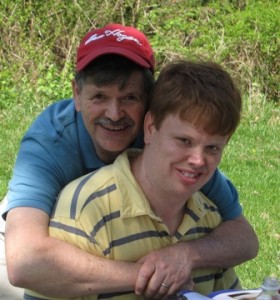
Happy Father’s Day Dad!
“Anyone can be a Father, but only someone special can be a Dad.” (anon.)
“Love is that condition in which the happiness of another person is essential to your own.” (Heinlein, Stranger in a Strange Land, 1961.)
What is a Father’s “unconditional love”?
Many people have trouble explaining “unconditional love” and “fathers.”
I remember one Hallmark commercial where an older dad said he really only understood a father’s love when he saw his son holding his new baby–his grandchild. We were fortunate to see our son, Tommy with his new daughter. That is one amazing moment that made our hearts burst with love and pride.
But when I think of my husband Tom, and the harder love, the real unconditional love, it is when he is with Aaron, our oldest son who has the label of autism, intellectual and developmental disabilities.
Love is in the details, not the traditional big events like a new grandchild. It is in the demanding-ordinary-daily-love Tom pours into making Aaron’s life “normal” and “special” at the same time. Doing things that have to be done, when you would rather do other things.
Here is today’s example:
Dad picked up Aaron at his house at 8:30 AM today. The caregivers are going to a family reunion, so we want to give them some additional time off. After checking on his meds, asking about his toileting, Dad talked to the caregivers about our recent visit to Aaron’s medical doctor. Tom tells the staff, “Yes, you have to get the prescription filled.” And “Yes, this is now Saturday and we went to the doctor on Monday. What’s the problem?”
Tom then brings Aaron home to our house, takes him to the bathroom, cuts his fingernails, throws in some laundry (I’m still recovering from my surgery) and after an hour takes Aaron to get a haircut, go to the grocery and treat Aaron to a hamburger. Mom gets to stay home and hang out on the computer.
Later today we plan on taking Aaron swimming, and then seeing Tommy and his family to celebrate Father’s Day. We’ll take Aaron back to his house about 8:30 pm.
Dad is hoping to catch some of the US Open Golf Tournament on TV, but he fits that in between Aaron’s care.
Sure, as we celebrate Father’s Day, we’ll give Dad a couple of little presents. I’m sure our granddaughter will give him a big hug and card too. But the “Bagel Guillotine” slicer, some peanuts for the ballgame, and a new golf shirt will never be enough thanks for all the love and devotion Dad gives to his sons–every day.
Happy Father’s Day Dad! We love you unconditionally too.
Amplify the positive outliers
This week Seth Godin wrote an interesting post about creating change. He suggests that the easiest way is to “Amplify the positive outliers.” In other words, we don’t waste our time “extinguishing bad behaviors” and instead find “positive deviants,” positive examples of what we are trying to do, and then “give them a platform, a microphone, and public praise.” Seth says by focusing on our success stories and celebrating our superstars we will change our culture and strengthen our tribe.
In our Climbing Every Mountain community and other tribes of “inclusion” and “normalization,” we face daily examples of people promoting and building segregated schools for children with autism, segregated adult day programs, and even a new segregated “handicap-only” baseball field. These are downright depressing and steal our energy and spirit.
So let’s begin thinking of positive examples and naming our “positive deviants.” Most of the advocates and parents I know would like to be called a “positive deviant”—Yep, that fits our label system just fine. Maybe we should be pushing the psychologists to add that to the DSM, that might make better reading than saying parents are still stuck in the grief cycle, eh?
Enjoy this minute of thinking about “The Crazy Ones” who helped change the world. If I were going to make a video, I would start with the above picture of my husband Tom and Aaron, the kid with all the labels–including “son.”
Some of the other Superstars in our life who would be in my video are Dotty Foley, Ann Turnbull, Annie Bauer, Michael Valdini, Dennis Burger, Colleen Wieck, Lou Brown, Anne Donnellan, Ed Roberts, Bob Perske, Tommy and Ana Ulrich, Mary Ann Roncker, Debbie Wetzel, Patty McMahon, Madeline Will, Patty McGill Smith, Patti Hackett Hunter, Leanne Bowling, Alison Ford, and many others.
Join in the Fun
This post is dedicated to all the Superstar Dads out there who are changing the world.
In the comments, tell us: If you made a video of your “positive deviants” who would be your superstars? Not just dads, but parents, teachers, professionals, and self-advocates who you think have changed our world? Who are the people who have moved us from segregation and given us the dream of an inclusive life with our families and terrific dads?
Keep Climbing: Onward and Upward
All my best,
Mary
Related Posts:
Dad and our trip to Indiana
Parents and Advocates Never Give Up
Hope for Families
Ed Roberts| Be extraordinary
……………………………………………
by Mary E. Ulrich | May 25, 2024
Crossing the “yet”
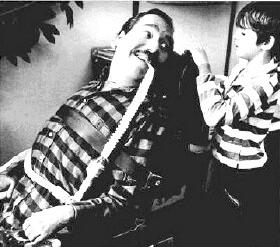 Ed Roberts was an amazing guy. We were both on the TASH board and I got to spend some time with he and his son (pictured). Click on his name and see his incredible accomplishments. Ed was into action, not words. He was asked to be one of President George Bush’s “1000 points of light,” which he declined calling it Bush’s “1000 points of hype.” When he died, his wheelchair was donated to the Smithsonian. One of Ed’s quotes was:
There are only two kinds of people in the world: the disabled, and the yet-to-be-disabled.
This past year, my husband has had some heart issues and I’ve struggled with sciatica. Because my back pain’s not going away (even though I’ve had the lumbar shots, physical therapy…) we decided we needed to move to a ranch house.
And true to Ed Roberts’ prediction, I have crossed over the “yet” and am now starting to see the world from the “disabled” point of view.
Of course I’ve always seen what worked and didn’t work for Aaron, my son with a severe disability. But even with that knowledge and experience, now it is more personal. It is me. And it is shocking.
Boomers and Housing “thought leaders”
First of all, the housing market is filled with two stories; split, tri and quad levels but few ranches. The ranches that are available were built in the 60s. So they have old plumbing, bathrooms the size of postage stamps, and some even have steps. Yep, steps to get to the one-floor plan.
As we boomers age there is a scarcity of accessible housing. Sure there are some new patio homes but they are pricey and often in “mature” neighborhoods. Sure there are condos and apartments with elevators in crowded senior high-rises. Sure there are retirement communities which are basically segregated facilities–beautiful, but still segregated. Isn’t that what we have been fighting against for the last 30 years?
So, what to do?
Next week my husband and I are putting our multi-level condo up for sale. We figure in this market, it is wise to sell first and then buy. But as we go through potential houses, we are not finding anything appropriate. Where is the diversity? Where are the neighborhoods where ranches are mixed with multi-level houses? Where are the neighborhoods where seniors and young families can live together?
Universal Design
Universal Design has been around for a long time, where are the houses built with this concept? Why have the builders not used state-of-the-art thinking and technology?
I wish Ed were still here to make a joke and put things in perspective. I wish Ed were here to share his wisdom and spirit. Fact is, I just plain wish Ed were here.
And once again, I am reminded of my own aging and mortality. And that is another shock.
I never used to have friends who were dead.
In some ways I am lucky, I don’t carry many of the fears and superstitions of the previous generationI know about the difference between having a disability and a handicap (see post). I know how to advocate for my needs.
As I think about my own passage into the world of disability, I feel more prepared. People with severe disabilities have led the way. They have taught us to strip away all the frills and find the core of what we need. They have helped us learn about interdependence, adaptations and accommodations, systems of support, circles of friends, partial participation and community involvement.
They have taught us what is important–to be surrounded with people who love and care about us.
So, Tom and I will figure it all out. We will use the advocacy and problem-solving skills Aaron and others have taught us.
I remember when one of our relatives had a stroke. He would complain verbally and non-verbally, “I’ve only been like this for a short time” (I used to be independent and able to walk.) He would explain to everyone who would listen, “I didn’t use to be handicapped. I was an engineer.” (I had worth.) “Aaron is too close he might step on my foot.” (I’m damaged now, but I’m not like him, once I was whole.) He did not want to be near Aaron. He never put his prejudices into an actual discussion, he just always had this attitude about people with disabilities–and by god, he wasn’t one of “them.”
We have worked so hard to change people’s attitudes about people with disabilities. The next generation of children has had personal experiences with people with disabilities in the schools and community. But maybe the bigger lesson is that learning to be more tolerant about others, will make it easier for us to be more tolerant of ourselves. Hopefully, part of our learning about differences will ease the process of getting older.
We are all the same on the inside. We all need to be loved, safe, happy and give to others. That doesn’t depend on what our outer body looks like. That doesn’t depend on what side of the “yet” we are on.
I think these lessons will serve me well.
ps. Anyone looking for a great condo?
Please share your thoughts in the comments.
Are you offended with Ed’s quote, “There are only two kinds of people in the world: the disabled and the yet-to-be-disabled.” Do you think this discussion will help us as we age?
Keep Climbing–Onward and Upward
All the best,
Mary