My mom became a nurse during WW II. One of her first assignments involved going into the homes of elderly people in the Washington, DC area. Many of these older Americans were by themselves because their adult children were serving in the war. These were regular patients she saw every week and she would give them their shots, medication, baths, change bandages… whatever they needed. Mom told stories about how her best medicine was often listening. They were scared and lonely and she would read the precious letters that came from faraway places and help them write back. One afternoon she was with an elderly couple when the military officers told them their son had been killed in action. She gave each person personal attention and dignity.
Her patients were personal. She knew them and their stories. She cared about them as individuals.
After each home visit, she and her companion (they traveled in twos) would take the bus or trolley cars back to the dorm where all the nurses lived. She had to wash, press, and starch her uniform (this was before modern washers and dryers), she had to write her reports (longhand with a pen) and she had to make sure she was inside the dorm before 10 PM or she would be marked a fallen woman and unworthy to be a nurse.
After the war, she married my dad and had five children in six years, with another child 4 years later–six children total in 10 years. When the children were all school-age, she again became a part-time ER and Recovery Room nurse.
Nursing and Caring in 2010
Mom always loved hospitals and everything medical. Even now at 88 years old, she remembers the names and doses of each of her 15+ medications. She tries to remember the nursing staff but there are too many of them.
This afternoon I stayed in her room while a steady stream of professionals did the prep work for her hip replacement surgery. They had her IV running; she was given preventative medicine for vomiting and acid reflux. She had one tube taped into her artery so that during the surgery additional meds could be given without needle pricks. Everything was plastic, disposable, and sterile.
Everything was Impersonal
Each of the medical professionals seemed competent and efficient. They explained the procedures, they reassured her that her doctor was the best; they had amazing machines that beeped and whirled. But, even with me standing there, no one cared who mom was. She was the “hip replacement in room 424.”
Again, this was a state-of-the-art hospital with excellent nurses. Everyone was super nice and competent. On the bulletin board near her bed “Helen” was written in large green markers. Each of her nurses also signed the bulletin board so she would know the name of the staff person.
Games of Caring
In this game of “name that patient” and “ring-around-revolving staff” It did seem disrespectful that a twenty-something staff person would address her as “Helen” like they were best buds.
In Disability World, we have often dealt with staff whose job was to write a report and then give their expertise as to what was best for Aaron. Sometimes the prejudice and low expections of the professionals are dangerous to the person (click here). As an advocate, I’ve been in meetings when psychologists (they were the worst) would go over their whole report with recommendations for placements or goals and they never even met the person. They claimed to know the person better than the biased parents or teachers…. Advocates always recommend parents bring a picture of their child to the meeting. I know of one case where the psychologist wrote the report up, only to find out he had the wrong person at the meeting.
Today, the company that provides Aaron’s residential care has “Home Managers” who oversee Aaron’s life. The “Home Managers” do not have anything in their job descriptions about getting to know Aaron–and since this is just a job to them–they do not do anything that isn’t in their job description. When I forced the one woman to actually meet Aaron, she explained she only did scheduling and paperwork. Yet, she is the person who would be in charge of Aaron if my husband and I got hit by a bus tomorrow; she is the person who signs off on Aaron’s ISP (Individual Service Plan) and she is the one who hires and trains staff. UNBELIEVABLE!
Always the Advocate
Learning to be an advocate is useful in so many situations. Research says people who are perceived as important, wealthy, or famous get better care than people who are anonymous, weak, and ordinary.
As the two nurses maneuvered the hospital bed into the elevator with the soft music and the doors which opened in the front and back, I looked at my mom. Here was this frail 88-year-old woman with her white hair mussed in bed head. Her skin kind of draped loosely around her eyes, mouth and neck. She insisted on putting on her lipstick before she went, so her bright red lips were in contrast to her pale waxy complexion.
She was just another old person to these nurses. She didn’t have an important story.
Going from Nurse to Patient to Nurse
On the elevator ride down to surgery, I told the nurses about her history. Suddenly mom was NOT a nobody. She became a real person—more than just the patient they were fitting into the schedule, the last surgery of the day, the hip replacement in room 424.
On the elevator ride down to surgery, I shared some of mom’s stories about the changes in nursing, hospitals, and medicine. We talked about the old days when mom wore starched white uniforms and hats–not permanent press colorful smocks and gym shoes with disposable covers. Think about it, in the fifties the hospitals were not air-conditioned (it was 85 degrees today) and many hospitals didn’t even have elevators. I told them how she visited the sick and elderly in their homes.
We were in the elevator for probably 4 minutes. That was all it took.
The Human Story Makes the Difference
Now, the old lady “Helen” was a retired nurse who worked when nurses really knew their patients. She was not a stranger; she was a nurse–one of them. She was a pioneer who paved the way for these two women pushing her bed. She was also a future THEM in 50 years when their hair would be mussed with bed-head and they would need caring nurses.
When we reached the doors to the surgery department, I kissed my mom on her red lipstick. This time when the nurse said, “Helen, we’ll take good care of you.” I smiled and knew “Helen” was now a real person and would get both dignity and good care.
In this picture, my mom, Helen Otten, is surrounded by my family. She died days short of her 93rd birthday. Loved by her children and grandchildren. She left a legacy of caring and love for her family and all her patients.
Share YOUR Story:
Come on, I’m sure you have some comments about hospitals, medical or school professionals, and caring.
Ever wonder who puts all those flags on the graves of veterans?
MEMORIAL DAY
Like communities all across America, on Memorial Day our city holds a celebration to remember our basic values. A parade starts at the high school and ends at the cemetery where generations of citizens and soldiers end their life’s journey.
As the sun was beating down to the Sousa marches, our whole family, including my uncle John, was standing by the largest fountain, watching the parade of Little League teams, high school marching bands, Boy Scouts, and the politicians in their red, white, and blue ties.
The cemetery was beautifully prepared. The lawns were like carpet, the grass on the edge of the sidewalk was so carefully clipped, it stood at attention; the peonies, irises, and annuals colored the grounds with reds, pinks, purples, and whites. Everyone was feeling damn patriotic.
Everyone, except Uncle John. He turned to me and said, “I wasn’t always handicapped.”
“What?” I know I raised my eyebrows and wondered where this was coming from. I mean, Uncle John was never a happy person, but since he had a stroke, he was a weary soul. We hoped this celebration would lift his spirits. After all, who doesn’t like a parade?
Uncle John explained, “You know, I was an electrician. I was important, I contributed, and I worked in a great hotel for 30 years. Now I just sit here and watch life go by. I’m handicapped and useless.”
Not exactly a cheerful parade conversation but I couldn’t resist. “Uncle John, having a handicap isn’t the end of the world. Can you enjoy the parade? Look at those little kids jumping up and down on their decorated wagons.”
“You just don’t understand,” he said. “I’m not like him,” eye-pointing to Aaron.
Some Battles Can’t be Won
Since Aaron, my son with the label of autism, was sitting in the lawn chair next to Uncle John, I felt I needed to say something.
But I couldn’t find any words.
In silence, we were side-by-side, almost touching–yet thousands of miles away from each other–as we watched the veterans from the VFW pass by in antique cars.
The soldiers varied in shapes and sizes, men and women, veterans from Iraq, and Afghanistan wars to seniors of the war that would end all wars—but didn’t.
The sun reflected off the windshields, and I reflected that our society treasures antique cars which are worth more now than when new. The old model cars were spit-shined and decorated with banners. The old soldiers also wore banners, but many of their faces and bodies were worn. Did our society value them?
Some soldiers were younger than my sons, Aaron and Tommy. But, we all know their youth was shattered in the deserts and mountains of strange lands.
Some of the veterans in the parade carried the labels of “handicapped and disability.”
As the crowd cheered and waved, I had to wonder if these brave men and women would be truly accepted into our society. Would others, like Uncle John, say they were “useless”?
Would they only see the handicapping condition, would they consider these wounded warriors better than Aaron, because they were once whole? Because they were “damaged” fighting for our country?
And another: Bob said after WWII, a family in London moved into a new neighborhood. Instead of saying their son had cerebral palsy and had the label of intellectual disability from birth, they told their neighbors, “He was gassed in the trenches of Germany.” And in a post-war era of grief and loss, that benign lie made all the difference. Instead of avoiding or shunning the family, the new neighbors welcomed their family into the community. Their attitudes were completely different.
Modern Day Attitudes
A soldier who used a wheelchair got some sort of award and the crowd clapped. I wondered if our community embraced his family, or did we just give him a token wall plaque on Memorial Day and then segregate, discriminate and ignore him the rest of the year? Would he get the support he needed to live, work and recreate in the community?
The same questions I often ask Aaron. Is one human more valuable than another? Is that what our country stands for? What the soldiers sacrificed for?
Disabled and Yet-to-be Disabled
Didn’t everyone understand there are only two groups of people in this world–the disabled, and the yet-to-be-disabled? If we live long enough, each of us will have a disability.
Being Useful, Proving Worth.
People with disabilities are not useless and just watching the parade of life go by.
And then being a good advocate—or the crazy person who doesn’t know boundaries or when to quit– I asked Uncle John if he noticed how beautiful the cemetery grounds looked.
I told him Aaron worked at this cemetery. He and the crew of people who did the landscaping had disabilities, but if they had the support they needed, they weren’t handicapped and “useless.” In fact, they were the ones who made the grounds look so beautiful.
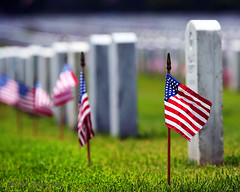
I pointed to the rows of tombstones which each held a single flag.
I told him that for the last 2 days, Aaron’s job was to place a flag in the holders by each tombstone. And tomorrow, Aaron would go back and remove the flags and save them for 4th of July, when he would again put them out.
Was Aaron useless?
What I remember| Memorial Day:
It’s been thirty years since that Memorial Day parade. Uncle John died a couple of months later–old, bitter, and handicapped. He never hugged Aaron or saw what Aaron could do, only what he couldn’t do.
And, like the day of the parade when he missed the joy, pride, and purpose of the Memorial Day celebration, Uncle John also missed the joy Aaron brought to anyone who opened their heart.
I think Aaron and I will wave a couple of flags tomorrow to celebrate America.
And, I’m hoping that while Aaron was placing those flags in the cemetery, other people were seeing him as a competent, contributing member of our community.
Keep Climbing: Onward and Upward
All my best,
Mary
Comments:
Come on, I know you want to share some memory of your own Memorial Day Parade, family reunion, and attitudes about disabilities, and “Handicapped.” Lots of good ideas, let us know what you are thinking.
Dedicated to Marine Sgt. John P. Huling of West Chester, OH who was killed in Afghanistan just days before his 26th birthday. His mother, Debbie, worked with my husband Tom. He was buried at Arlington National Cemetary Memorial Day Weekend, 2012.
Ever wonder who puts all those flags on the graves of veterans?
MEMORIAL DAY Parades
Memorial Day is a celebration across communities in America that helps us remember our basic values and the soldiers who fought and died for them. Usually, it also includes a parade, one of my favorite parts of the holiday.
Several years ago my family sat in lawn chairs in our local cemetery watching the parade of Little League teams, high school marching bands, veterans in uniforms of many wars, and politicians in their red, white, and blue ties.
The cemetery was beautiful. The lawns were like carpet. American flags marked each tombstone. The flowers colored the grounds with reds and whites. Everyone was feeling damn patriotic.
Everyone except my uncle John. He turned to me and said, “I wasn’t always handicapped.”
I raised my eyebrows and wondered where this came from. Uncle John was never a happy person, but since he had a stroke, he’d become a weary soul. We’d hoped this celebration would lift his spirits.
After all, who doesn’t like a parade?
Uncle John huffed out a loud breath, pleaded with his eyes, and said: “You know, I was an electrician. I was important, I contributed to society, and I worked in a great hotel for 30 years. Now I sit here and watch life go by. I’m handicapped and useless.”
Not exactly a cheerful parade conversation.
I tried to see things from his point of view but couldn’t resist. “Uncle John, having a handicap isn’t the end of the world. Can you enjoy the parade? Look at those little kids jumping up and down on their decorated wagons.”
“You just don’t understand,” he said. “I’m not like him.”
And he pointed to my son Aaron, his nephew who has the label of autism.
Some Battles Can’t Be Won
I felt I needed to say something but couldn’t find any words. So in silence, Uncle John, Aaron, and I sat side-by-side, almost touching– yet thousands of miles away.
What Attitudes and Freedoms Do We Celebrate?
Some of the veterans in the parade were old with worn faces and bodies. Did our society value them?
Some soldiers were younger than Aaron… and their youth was shattered in the deserts and mountains of strange lands.
Some veterans carried labels of “handicapped and disability.”
And as the crowd cheered and waved, I wondered if these brave men and women would ever be truly accepted into our society.
Would others like Uncle John say they were “useless”? Would they only see the handicap?
Would they consider these wounded warriors better than people born disabled, because the soldiers were once whole and then “damaged” fighting for our country?
During the ceremony, a soldier in a wheelchair got an award, and the crowd clapped. I wondered if the community would further support him as he integrated back into society, or was his token wall plaque on Memorial Day the end?
Would people segregate, discriminate, and ignore him for the rest of the year? Would the anti-DEI crowd who opposed Diversity-Equality-Inclusion keep working against us? Would he get the support he needed to live, work, and become part of the community?
Disabled and Yet-to-be Disabled
As Ed Roberts used to say, there are only two groups of people in this world–the disabled, and the yet-to-be-disabled. If we live long enough, each of us will have a disability.
It’s something to think about.
I asked Uncle John if he noticed how the cemetery grounds looked. I told him Aaron worked at this cemetery. He and the landscaping crew had disabilities.
And with support, they weren’t handicapped and “useless.” They were the ones who made the grounds look so beautiful.
Uncle John died a couple of months later– old, bitter, and handicapped.
He never understood that people with disabilities could do all sorts of things. He saw only what they couldn’t do. He focused only on what he couldn’t do. And he’d missed the joy, pride, and purpose of the Memorial Day celebration – just like he missed the joy of Aaron and the joys in his own life.
On this Memorial Day Aaron and I will wave a couple of flags to celebrate America … both of us are competent, contributing members of our community and fight for the Diversity, Equality, and Inclusion of all the people in America.
Keep Climbing: Onward and Upward
All my best,
Mary
Comments: Come on, I know you want to share some memories of your own Memorial Day Parade, family reunion, attitudes about disabilities, and “Handicapped.” You all have ideas, let us know what you are thinking.
Today’s Feature for all you country music fans is from the Ohio Chapter of People First and was shown during the Rehabilitation Services Commission (RSC) Conference in 2012.
I loved this video, the message, the music, the participation, the fact that the People First group made the video and presented it to the “professionals”–I mean, who is teaching who?
Thoughts on Jobs and the Role of Government
Every day I watch my son, Aaron who has the label of autism, as he sits and loses skills he had in high school. We still have the dream plan, and we still have hope, but we need help to make it happen.
Why is that?
I know it is very popular to bash the government. “Not a government plan”, right? But is that what we really want?
The model programs, grants, initiatives for work, and job coaches of ten years ago are gone zap.
New RSC priorities and guidelines, cutbacks, and more cutbacks on funds have dried up and forced us back to depending on the charity, kindness and pity of others.
It’s NOT a matter of not knowing what to do
We know how to support people in the workplace. It is difficult surely, but we know how to get people jobs.
Special Education and Rehabilitation Services have decades of research and model projects. Marc Gold, Lou Brown, and hundreds of skilled teachers and professionals have shown us the direction and specific skills we need to get jobs. In this short video, Dr. Lou Brown talks about institutionalization vs. community.
Unfortunately, because there is no mandate for adult services (like public laws which require children to go to school), there are also no requirements for adult day programs. No certification for the people in charge (GED preferred instead of licensed teachers), no functional or community-based curriculum, and no related services like speech, physical or occupational therapists. Adults are on their own. And there is no due process rights for parents/guardians to hold people accountable. We are told to find another program if we are unhappy.
So, what are our alternatives?
We have to keep believing. Keep telling others about the vision of a job, or if not paid, then meaningful work/volunteer experiences.
Our young people have to remind us not to give up. They have to keep in our face singing, shouting, and even misbehaving.
Certainly, we need the government. And we need those government plans to be more than just pieces of paper–we need them to support each individual so they can at least partially participate in having a job.
Comments: Any thoughts on “I need a job?” Any other videos you want to recommend to our community?


 photo credit: nursing pins