If you find these useful, I hope you will comment and then share them on Facebook, Twitter and your other social media. Thanks. Mary
Words and labels make a big difference in our lives. How you answer this question can make all the difference for a person you love.
“Disability” or “Handicapped”?
Do the words disability and handicapped mean the same thing?
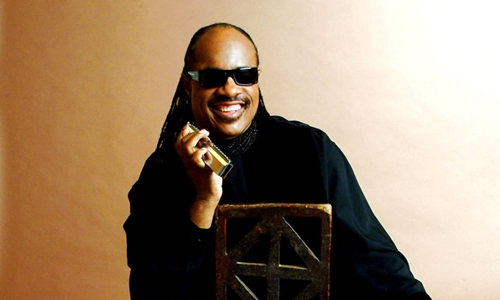
The short answer is NO. Disability and handicapped do not mean the same thing. And the differences are important. Is Stevie Wonder handicapped?
Does Stevie Wonder have a disability?
“A DISABILITY refers to a reduction of function or the absence of a particular body part or organ.”
So YES, Stevie Wonder, who is blind, would qualify as a person with a disability.
A disability is usually a lifelong condition: autism, an intellectual disability (the new term for mental retardation), cerebral palsy, or being deaf or blind….
Does Stevie Wonder have a handicap?
“A HANDICAP is viewed as a disadvantage resulting from a disability that limits or prevents fulfillment.”
Does being blind prevent Stevie Wonder from singing or achieving personal fulfillment as an entertainer? NO. So Stevie Wonder, though he has a disability, does not have a handicap.
Does Stevie Wonder need support? Of course. If Stevie Wonder did not have a personal assistant or any of the other modifications and adaptations he needed, then he might be handicapped.
See the difference?
Terrence Parkin swam in the 2000 and 2004 Olympics, winning a Silver Medal for South Africa. Does he have a disability? Yes, he is deaf. Does he have a handicap? Not as long as they add strobe light signals to the usual auditory buzzer to start the race. If however, the committee didn’t agree to add the strobe lights, then Terrence would have been handicapped and unable to participate in the Olympic Summer Games. Being handicapped can depend on the attitudes and social construction of the culture.
Disability is socially constructed
Like many people my age, I have trouble reading small print, (Disability). If I lived in a society where there were no books, or it was against the law to teach women to read, it might not matter if my eyesight was as sharp as it was when I was younger. However, in my culture, so many people wear glasses there is no stigma attached to having the disability of poor eyesight. So, I do not have a handicap. If I use a wheelchair and the building is accessible, I can still have a disability, but I can go to the grocery, do my banking… and not be handicapped. (I hope this makes sense. We will talk more about this in a future post.)
Why is this important?
If you or someone you love has a disability, it is not the end of the world. Even though there might not be a medical miracle or cure at this time, the disability is just a disability. No one wants to be different than anyone else. No one wants to have a harder time doing things than other people, but with the right supports it is possible to have a fulfilling and satisfying life, and not be handicapped.
This is a message full of hope. Robert Schuller says, “Look at what you have left, not what you have lost.” Physical, Occupational, Speech Therapists, Teachers, Counselors, as well as family members, friends and neighbors can look at their attitudes toward a person with a “disability” and rather than get stuck on something they can’t fix, instead spend their energy on creating an inclusive environment that is accessible for all of us.
This is our call to action: We can each think about what we can add, subtract or change to the environment to give a person with a disability the support they need so they will never have to be handicapped.
In the comments tell me what you are thinking. Do you have a story to share? How are you making your child or loved one less handicapped?
Keep Climbing: Onward and Upward
All my best,
Mary
Reference:
Bauer and Shea (1997) Special education: A social systems perspective. Brown and Benchmark: Chicago.p. 12.
————————————————————-
LANGUAGE CHANGE!
Thanks to the hard work of the Advocacy Leadership Network (ALN) of Hamilton County (Ohio) DD Services, the Hamilton County Board of Commissioners officially resolved that “accessible” will replace “handicapped” on all new and replacement signs in the county! ALN, composed of leaders who have disabilities, had previously been instrumental in having the phrase “mental retardation” removed from state laws in Ohio.
The news is focused on controversy about DEI: Diversity, Equality, Inclusion.
What’s wrong with the Medical Model?
What’s wrong with the Charity Model?
What’s the big deal about “normalization” and “inclusion”?
Why is “special” not special?
For those of us who care about people with disabilities and people on the fringe of society, the conversations are stressful–the whole paradigm shift “thingy”. Most people don’t want to take the time to understand or learn a whole new way of looking at the world. They think their view of the world is just fine, thank you very much.
As parents, we have been learning about differences for 30-40 years, our child’s entire lifetime. Our child demands we still learn every day.
For the next couple of days, I’m going share some of the people who shaped my beliefs.
I hope they can deliver the message of “normalization” far better than I ever could.
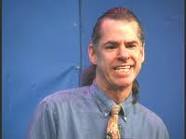
Norm Kunc changes lives.
I would spend the whole year teaching university students and teachers about the need for inclusion, normalization, self-advocacy, and people first… and they would nod their heads (or scratch their heads at the crazy lady), pass their tests, and go on with the way they always did things.
Norm Kunc came to campus, spoke to these same students, and in fifteen minutes–he rocked their world.
That quick–his message is that powerful.
Here is Norm’s Credo of Support. It is not the same as hearing him in person, but the video message shows the power of words and the talents of self-advocates. When Norm introduces the video he says the words just poured out of his heart.
In the post: Caring Community| People First Language we talked about the power of labels, negative stereotypes and the paradigm shift of looking at all people as PEOPLE First!
Today, on Valentine’s Day, I am asking you to think about how you use words:
Do my words cause Heartaches?
Do my words cause Heartsongs?
What are you doing?
WHAT are you doing?
What ARE you doing?
What are YOU doing?
WHAT THE HELL ARE YOU DOING!!!!
The same words can be said in anger or with gentle concern.
The speaker, the listener, the context of the communication, as well as the intent all, make a difference.
Parents, Teachers, Coworkers, Friends, Enemies… We have all been misunderstood and misinterpreted. We have all wished we could swallow what came out of our mouths–take back our words. We have all been both aggressors and victims and have given heartaches as well as heartsongs.
HEARTACHES: “What’s that mess on your shirt?”
HEARTSONGS: “I see you have paint on your shirt.”
————————————————————-
HEARTACHES: “NO!”
HEARTSONGS: “Let’s talk about this before you decide.”
————————————————————
HEARTACHES: “Get over here right now!”
HEARTSONGS: “I need you with me.”
————————————————————-
HEARTACHES: “I told you so.”
HEARTSONGS: “That was harder than you thought.”
—————————————————————
In the comment section, let’s share some ideas on how you could make each of the following examples into either a heartache, or a heartsong?
Scenarios: Heartaches or Heartsongs.
1. Sara is eating breakfast. The bus is coming in 5 minutes. She spills her juice while reaching for the cereal.
What could you say that would cause a heartache?
What could you say that would cause a heartsong?
2. Ken wants to help his friend wash the car. He accidentally squirts him with the hose.
What could you say that could cause a heartache?
What could you say that could cause a heartsong?
3. Emily comes home from work. When asked about her day, she begins to cry and says, “Jim doesn’t like me.”
What could you say that could cause a heartache?
What could you say that could cause a heartsong?
By speaking with your heart, you may be able to bring out the very best in people. Give them a chance to talk. Listen patiently.
And of course, there is always the quote: “I know that you believe you understand what you think I said, but I’m not sure you realize that what you heard is not what I meant.” But we’ll save that for another post.
I’m wishing you a day filled with heartsongs. May you have many opportunities to give them and to receive them. Spread the love.
Keep Climbing: Onward and Upward
All my love,
Mary
Comments:
Do you have any examples of heartaches, heartsongs?
Heartaches turned into heartsongs?
Use the examples above, or share some from your own experiences.
Balancing my life vs. my child’s: Until my dying breath…
This is going to be a tough post. I might chicken out and not even publish it. I don’t want it to be a pity party: “You parents go through so much. You are Saints.” God Forbid!
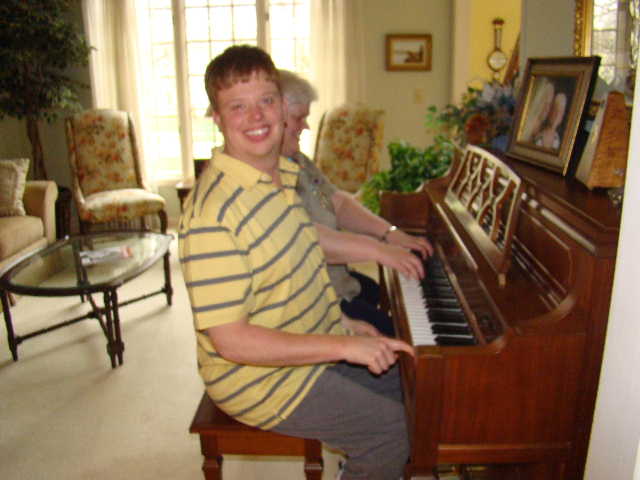
See Aaron playing the key?
I am hoping this message will give other families a chance to take a breath and allow themselves a little slack. For those of you who are professionals, I hope it gives some insight into the choices families make–usually at a cost.
Families make hard choices all the time
All parents of young children, and adults who are caring for their elderly parents experience these same dilemmas. The sandwich generation is a well known problem in our culture and effects most families.
What is different for parents whose children are adults with disabilities? This intense care is usually not discussed or understood. It is not a time-limited situation where your child grows up or your parent dies.
Aaron is 39 years old and as I get older this is a growing issue. We are talking about–well, until my dying breath.
First Sign of Growing Old
I’ve been having lumbar back pain and had to begin a series of injections and other stuff. This is the first major medical issue I’ve ever had, so I have no right to complain. Plus my philosophy is that anytime a Doctor can actually “fix” a situation, I consider it a temporary problem and a medical victory.
BUT the bottom line was that for the first time ever I had to cancel Aaron’s doctor appointment.
I consciously chose my needs over my child’s.
I’ve had pain before, sure. But that has never stopped me, so why was this time different?
What was I thinking?
* There was the 50 mile round-trip drive to Aaron’s Doctor, the only one I trust who takes a medical card…
* Aaron goes every three months and didn’t have any major issues…
* We bring Aaron home with us every Saturday night. Whenever we take Aaron to the Doctor, we keep him both Saturday and Sunday nights and try to schedule on Monday morning…
* Monday mornings are the busiest day for the Doctor so there is always a long wait in a room full of sick people… Aaron is not a good “waiter”…
* I feel bad about the last minute cancellation to Aaron’s doctor, we try to be respectful of his time. If we have to pay the $30. charge, so be it.
* I always bring flowers to the receptionist in the Doctor’s office. She takes a special interest in Aaron and always gives him hugs and makes him smile. (I know, I know, amazing that I would spend energy on flowers for the receptionist–but she is one of the few people who get excited to see Aaron so that makes me happy too)…
* Going to the doctor takes a full morning…
* After the doctor visit we take Aaron out to lunch and then drop him off at his day program….
* Monday is the “community outing” day at the day program–so when they actually do what they say they are going to do (we won’t go there)…that means the group may or may not be in the building when we want to drop Aaron off…
* If the day program group is not there then we have to leave Aaron with the director who just puts Aaron with a book in a separate room and ignores him, a safety worry…
* The day program has Aaron’s noon medication, so the good thing is he will get his noon meds on time…
* The bad thing is I will have to be face-to-face with the director, who is a good person just has no resources. This means I will ask, “How is Aaron doing?” and the director will tell me they strongly think Aaron should be in diapers and have his meds increased… which will lead to… (let’s just say) be stressful for both of us and reinforce my reputation as “EVIL Parent and Day Program Public Enemy Number 1″….
I wrote this all out in stream of consciousness because this site is about climbing every mountain and mountains always have streams– did you like that analogy? 🙂 But, like most people, I think our conscious run streams of pros and cons with every decision we make.
Second and Third Thoughts:
I accept it, but I am not proud I made the decision to think of myself first. When we took Aaron back to his house on Sunday night and I was hardly able to walk on Monday morning I knew I did the right thing. There is no way I would have been physically able to give Aaron his bath, breakfast, and go through all the steps outlined above.
So Aaron will live, I’ll get better. But how soon will it be that either myself or my husband will have some serious condition where we require medical care and can’t take care of Aaron?
I look at Aaron’s housemate’s parents. They are in their 90s. They have done an admirable job, but age has now made them just as vulnerable as their son. Soon it will be my turn.
Damn! Why is this so hard? Why do I feel Aaron’s quality of life is ONLY in the hands of his family?
We are fortunate to have some good professional people in Aaron’s life. But why do the thousands of dollars being given to the agencies–who are supposed to be providing Aaron care–don’t care?
There is a huge difference between providing “care” and “caring”.
Comments
Okay, getting old is tough for everyone, share what you are thinking. Do you think it is more intense for a family with a child with a disability? Is it harder as the child grows into an adult?
Keep Climbing: Onward and Upward
All my best,
Mary

 Is Stevie Wonder handicapped?