
Technology Act: Just for the Deaf and Blind?

21st Century Communication and Video Accessibility Act

No one in my family is Deaf or Blind. So, why should I care that President Obama just signed new legislation forcing media and technology companies to make their products accessible?

Isn’t this just another example of more government rules and regulations? Big Brother intruding into private business? Government ruining all our lives with more paperwork and administrative costs? Government taking away our freedom?

New Laws don’t just drop from the satellites.

I was not involved in the Technology Act. But I have been involved in several other pieces of legislation. And believe me; the process is both tedious and thorough. As it should be!

Before any piece of legislation goes before the Congress and ultimately the President, there is a process. In my opinion, there are usually so many stakeholders and differing opinions it is a miracle anything gets done.

But this is a democracy–government by the people, for the people. So the people of all genders, races, economic groups, political affiliations, and all degrees of ability or disability are involved. Finding consensus on the ideas, then the language, the drafts, the compromises, the redrafts… everything takes forever. This is serious business.

Which makes sense. If we have rules and regulations for a simple baseball game, then certainly any legislative body needs a fair playing field to hear the concerns of its citizens.

I’ve been involved in several legislative committee meetings and public hearings. And down to the stop watches for speeches and comments–every procedural safeguard is specific.

Is there a need? What does the current law say? What have the courts ruled? Is this new law consistent with the constitution? How many people will benefit? What are the costs? What are the downsides? How will this impact business? Is the proposed technology available and possible?

When the ADA (Americans with Disabilities Act) was passed in 1990, it cited the fourteenth amendment of the constitution and assured people with disabilities the same protections as every other citizen of our country. At first there was tremendous backlash. How dare the government force us to allow people with disabilities into our private businesses? I spoke about some of our family experiences before ADA in my article “America the Beautiful” (click here). I also spoke about the 20 year anniversary of ADA (click here).

This technology act was not necessary.

This technology act would not have been necessary if the people and companies would have voluntarily served the needs of people with disabilities under the letter and spirit of ADA. Imagine over 60 million prospective customers who needed this modified technology–and business ignored them?

They forced these citizens and their families/advocates to have to get a congressional act passed because the companies were too stubborn, or narrow-minded or whatever. It could have been different. It could be different the next time businesses find another loophole and we are forced to seek yet another piece of legislation.

According to the Associated Press (click here)

Nondisabled people stand to benefit, too. They may find the devices and screens easier to use.

The law sets federal guidelines that require the telecommunications industry to:

_Make getting to the Internet easier by improving the user interfaces on smart phones.

_Provide audible descriptions of on-screen action to help the blind more fully enjoy television.

_Add captions to online TV programming to help the deaf.

_Make the equipment used for Internet telephone calls compatible with hearing aids.

_Add a button or other switch to television remote controls for simpler access to closed captioning on television.

Every time I go into a restaurant and see the closed-captioning words scrolling across the screen–I think of ADA. Every time I see a parent push her baby stroller up a curb cut, or see shopping carts going down a ramp, or customers riding an elevator–I think of ADA. Every time I go into a restroom and there is a stall wide enough your knees don’t touch the door–I think of ADA.

The difference between a person having a disability and being handicapped (click here) often is related to the technology and adaptations available.

People with disabilities have helped Velcro come out of the therapy closets, they have helped zippers be sewed into pants, and they have influenced packaging which makes it easier for all of us to open jars and bottles. The artificial replacement arms, legs, hips and other prosthetics were all first designed for wounded soldiers or people with disabilities–now the general population has better lives because of their pioneer efforts.

Who knows where the technology advances from this legislation might lead us? People who are “temporarily-able-bodied” today, might find at some future time, they need a cell phone or TV changer that has the modifications. It will be there because thousands of advocates worked to make it happen.

As our USA population is aging and needing more modifications, accommodations and universal design, we need to thank the hard work of people with disabilities, their families and advocates. As President Obama said, “They refused to accept the world as it is. The Disability Rights Movement is intertwined with American Progress.”

So, yes. This is more government regulation. Thank God and thank the USA.

What do you think? Make a comment.

In the last month we have seen the passage of Rosa’s Law, the Christopher & Dana Reeves Living with Paralysis Law and this Technology Act. Is the government acting on behalf of its vulnerable citizens, or is it over-governing and taking away our freedoms?

Keep Climbing: Onward and Upward.

All the best,
Mary

Day 29 of our Chris Brogan’s Every-Day-For-30-Days Blogging Challenge Follow us on Twitter #CB30BC

Alison Golden of The Secret Life of a Warrior Woman is my partner in this challenge: (click here to check out her new post.)
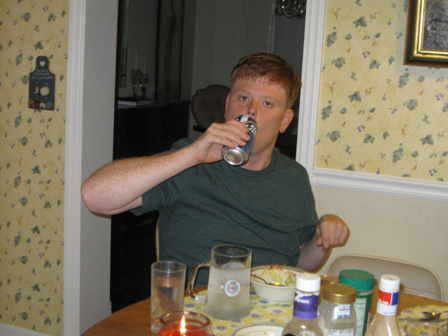

Drinking Beer and the Dignity of Risk

Drinking Beer and the Dignity of Risk

Above is a picture of Aaron drinking a “cold one.” He’s 35 years old–so he’s well past the drinking age. But is this right?

Beer and Spaghetti

The only time my husband drinks beer is when we have spaghetti for dinner. I don’t know if it is a tradition, a ritual, a family memory, or just some sensory combination he thinks tastes good. He can’t explain it.

The last time we were eating spaghetti, Aaron reached over and picked up Tom’s frosted mug and took a sip. Tom and I both watched his eyes get big with surprise–it was not what he expected.

Now, maybe we are horrible parents that we would let our son, with severe disabilities and the label of autism, drink an alcoholic beverage. After all beer is not recommended on the food pyramid. But over the years, we have tried to allow Aaron to have what the professionals call, “the dignity of risk.”

Dignity of Risk

The concept of “dignity of risk” is we allow our children, and ourselves, to make choices and the accompanying mistakes, failures… because this is how we learn. This is how we build our self-esteem and self-worth. Our Dignity.

Of course, we build a safety net into the situation. For instance, we would never allow Aaron to drink a bottle of cleaner he found under the sink. We would not allow him to get drunk. We would not allow him to take a glass of alcohol from a stranger.

Here is a related story about Aaron and his niece Isabella. (click here) Isabella’s safety was a priority. But with supervision, Uncle Aaron could have the dignity of pushing her in her stroller.

This is a difficult concept for many people to understand. Some people think Tom and I are reckless parents. An equal number think we are “hovering” parents and too protective. But hey, if you are a parent of a child with a severe disability, you know you can’t win. You have to do things as you see them.

Dignity of Risk and School

When Aaron was about 12 years old, one of his daily jobs was to help pack his lunch for school. He couldn’t do the whole job, but we worked with him, and over time, he learned to get a soft drink can and put it in his lunchbox.

This was a great goal because Aaron is always thirsty and loves pop. Getting a pop can and putting it in his lunchbox was a task that was repeated every day, so he got lots of practice. Aaron has physical balance issues and hates to bend over. The physical therapist recommended we put the pop on the middle shelf because it would strengthen some muscle or another….

It took Aaron a long time to master this goal, but he did it. It became part of our daily routine. And a source of pride.

The Dignity of Risk and Unexpected Circumstances

One day about noon I got a phone call from the school principal. He said, “Students are not allowed to bring beer to school.” Then he paused and burst into laughter.

“What?” was all I could say.

The principal then described the lunch scene where Aaron is sitting on the cafeteria benches with about a hundred other junior high school kids.

Aaron opens his lunchbox, and with his peanut butter and jelly sandwich and apple slices he pulls out a Bud Light. (I couldn’t make this up.)

Of course, the crowd went wild. By the time the teachers could figure out what the pandemonium was about, Aaron was a school legend.

Thankfully the principal knew Aaron and he wasn’t suspended.
Apparently, Aaron didn’t put his normal soda in his lunch box.

So then, was this a colossal failure and we stopped allowing Aaron to pack his lunch? No, his daily goal was amended to include sorting and classifying the silver cans before he put one into his lunchbox. Great learning opportunity, not failure.

Spaghetti and Beer

On the night of this picture, Aaron gave the beer back to his dad. We thought that was the end of it, but then he picked up the beer can, put it to his lips and said, “AHHHHH”.

Guess the spaghetti and beer tradition is genetic.

Virtual Beer for the first comment:

What do you think of the “Dignity of Risk”? Do you have any stories to share? Embarrassing Learning Experiences?

Keep Climbing: Onward and Upward
All the best,

Mary

Day 23 of our Chris Brogan’s Every-Day-For-30-Days Blogging Challenge Follow us on Twitter #CB30BC

Alison Golden of The Secret Life of a Warrior Woman is my partner in this challenge: (click here to check out her new post.)
10-10-10 at 10PM

Playing in the leaves for the first time

Last year on 09-09-09 it was my 60th birthday.

In the picture above, you see Baby Isabella playing in the leaves for the first time–another miracle from last year. There is nothing more magical than watching her learn and explore new things. She swings and colors and plays on the piano…and, drops to the floor when she doesn’t want to do something (hey, that’s part of growing up too). Today I saw her knock on the door and I swear I heard her say, “Who’s There?”

But my absolute favorite moment with Isabella is when I walk into the room and she squeals and runs into my arms. It just doesn’t get any better than that.

Today on 10-10-10 I’m wishing you all a year filled with blessings.

I am so thankful to each of you for helping me launch this blog–It is now three months old and at this time last year was just a dream.

For this coming year, I wish each of you a loved one who squeals and runs into your arms.

Let’s see what wonders there will be by 11-11-11 next year?

Comments: Time to Brag, Dream and Put it in writing:

What are your dreams and goals to be completed by 11-11-11? What have you completed since 09-09-09?
Share a little about yourself and maybe we can help each other reach those dreams.

Day 18 of our Chris Brogan’s Every-Day-For-30-Days Blogging Challenge Follow us on Twitter #CB30BC
Alison Golden of The Secret Life of a Warrior Woman is my partner in this challenge: (click here to check out her new post.)

Definitions of “Retarded”

Try Another way

Try Another Way

When President Obama signs Rosa’s Law, it is going to change some of the language and cultural issues about using the words, “retarded” and “mental retardation.”

In the previous post we talked about the Google keywords that pop up with the search “retarded” (click here).
Today I want to spend a couple minutes talking about a change in one of the historical definitions of mental retardation in 1973 and then share some links to definitions you might find on Google TODAY in 2010.

1973: Marc Gold redefines the definition of Mental Retardation

Marc Gold brought his revolutionary concept of “Try Another Way” (click here for more information)to Ohio in the ’70s. At their annual convention in 1982, TASH (formerly called The Association for Persons with Severe Handicaps) made a commemorative tape they presented to Marc just before he died. Pat Merchant, Debbie Wetzel, Mary Ann Roncker, me and other parents were filmed sitting in the front row crying our eyes out. Marc was a paradigm pioneer in education and supported employment. He was one of those feisty, remarkable, “Linchpin” types who changed the lives of people with intellectual disabilities and their families.

Marc believed everyone can learn if we can figure out how to teach them.

He rewrote the Definition of Mental Retardation (click here) and stressed OUR need to get better attitudes and skills. He also showed us people who had the label of mental retardation each had unique gifts and if we listen and observe, they will teach us how to teach them.

1973 Definition from American Association on Mental Deficiency: Mental retardation refers to significantly subaverage general intellectual functioning existing concurrently with deficits in adaptive behavior, and manifested during the developmental period.

Marc Gold’s definition: Mental retardation refers to a level of functioning which requires from society significantly above average training procedures and superior assets in adaptive behavior, manifested throughout life.

Marc’s definition created a major shift from individuals who have deficits, to the professionals having the deficits. This completely turned special education on its head. Now we had to look at what teaching strategies would be respectful and work.

2010: Other Definitions found on Google

When I typed “retarded” in the Google Search box (22,700,000 results) I was distressed to find most of the search results were for sites that made fun of people with the label of mental retardation. There were a couple sites which gave “definitions.” For instance, Wikipedia was ranked first and (click here) gave some traditional definitions.

But take a deep breath, grab some Tums and if you have the stomach, check out the definitions from the Urban Dictionary and Encyclopedia Dramatica.

Urban Dictionary

Urban Dictionary (click here for the complete list of 45 definitions):

term=retarded
retarded 2 sounds stupid dumb gay retard idiot lame annoying slow crazy dumbass moron idiotic tard ugly funny shit loser drunk fag ignorant ridiculous fat asshole fuck mental smart cool silly awesome bitch special fucktard ass crap emo moronic fool fucked up homo weird insane sex fail high boring bad fucking shitty douche homosexual.

1. retarded: 2072 up, 651 down (in the vote of readers, 2072 people thought this was a thumbs up definition)

An “unofficial” (not recognized by dictionaries) slang descriptor for a person/thing/action/object, etc., or a combination of, which is one or more of the following:

a waste of time, abandoned, abject, abominable, abortive, absurd, afraid, aimless, anxious, apprehenaive, arid, arrested, assailable, atomic, awful, baby, babyish, backward, bad, banal, barmy, barren, base, baseless, bastard, beastly, beggarly, behind, beside the question, blah, bland, bogus, bomb, bootless, boyish, brainless, bromidic, bummer, caitiffcapricious, careless, catchpenny, characterless, cheap, checked, cheesy, childish, childlike, clichéd, cloying, coarse, colorless, common, commonplace, confusing, contemptible, cotemptible, controvertible, conventional, cool, corn, cornball, corny, corrupt, counterproductive, cowering, cracked, crap, crappy, craven, crazy, crud, cruddy, daffy, daft, dastardly, dazed, dead, deadpan, deficient, degraded, degrading, dejected, delayed, delusive, dense, dense, deplorable, depraved, despicable, destitute, detestable, devoid, diffident, dim, diminutive, dippy, directionless, dirty, disgraceful, dishonest, dishonorable, dismayed, disposable, disreputable, dizzy, dodo, doltish, dopy, dotterel, down, downtrodden, drab, drifting, drudging, dull, dumb, empty, empty-headed, erratic, evanescent, everyday, evildoer, excessive, exhausted, expendable, expressionless, facetious, failed, failing, faint-hearted, fallacious, false, fanciful, fatuous, fawning, featherbrained, feeble, feebleminded, fickle, flaky, flashy, flat, flighty, flimsy, flip, flippant, fool, fool around, foolish, for grins, forlorn, fortuitous, foul, freaked out, freaky, frightened, frivolous, frothy, fruitless, futile, gagged up, garbage, garish, gay, giddy, girlish, glitzy, goalless, good-for-nothing, goofy, green, gross, groundless, groveling, grungy, gullible, gutless, hackneyed, half-baked, half-witted, hang dog, harebrained, heedless, ho hum, hokey, hokum, hollow, hopeless, humble, humbling, humdrum, humiliating, idiotic, idle, ignoble, ignominious, ignorant, ill-advised, ill-considered, illogical, imbecile, immaterial, immature, immobile, immoral, impassive, implausible, impracticable, impractical, improbable, inadequate, inane, inapplicable, inappreciable, incidental, inconceivable, incongruous, inconsequential, inconsiderable, incredible, indelicate, indiscreet, indiscriminate, ineffective, ineffectual, inept, inessential, inexpressive, infamous, infantile, inferior, inglorious, inscrutable, insensate, insignificant, insincere, insipid, insufficient, interminable, inutile, irksome, irrational nonsensical, irrelevant, irresolute, irresponsible, jejune, jittery, joking, joshing, junky, juvenile, kid stuff, kooky, lacking courage, lame, late, laughable, lemon, lifeless, light, light-minded, lily-livered, little, loathsome, loony, loser, lousy, low, low-born, lowly, lowly, low-ranking, ludicrous, mangy, meager, mean, meaningless, measly, mediocre, menial, mentally incompetent, meretricious, microscopic, mindless, minor, minute, indecisive, miscarried, miscreant, miserable, modest, momentary, monkey, monotonous, moronic, moth-eaten, naive, needless, negligible, nervous, niggling, nihil ad rem, no bargain, no dice, no good, no guts, no place, no-account, nonessential, nonsensical, not at issue, not serious, not to the purpose, nothing, nowhere, nugatory, hopeless, nuts, nutty, objectless, obscure, obtuse, odd, off offensive, old hat, old-fashioned, ordinary, otiose, outcast, paltry, panicky, pathetic, pedestrian, peripheral, petty, piddling, pitiable, pitiful, platitudinous, playful, plebeian, pointless, poker-faced, poor, potty, pre-kindergarten, preposterous, primitive, profitless, proletarian, prosaic, puerile, puny, purposeless, pusillanimous, random, rash, ratty, raunchy, recreant, removable, repetitious, result less, retiring, rinky-dink, rotten, rough, routine, rubbishy, run scared, sappy, scandalous, scanty, scared, scatterbrained, screwy, scrubby, scurvy, second-rate, seemly, senseless, sentimental, servile, severe, shabby, shallow, shameful, shiftless, shoddy, shopworn, shrinking, shtick, shy, silly, simple, simple-minded, skin-deep, sleazy, slight, slimy, slow, sluggish, small, small time, soft, sordid, sorry, sorry lot, spineless, sportive, squalid, square, stale, stale, stark, stereotyped, sterile, stiff, stock, stodgy, stolid, stray, stuffy, stupefied, stupid, submissive, subnormal, superficial, superfluous, tame, tatty, tawdry, tedious, terrible, the subject, the willies, thick, thickheaded, thin, thoughtless, threadbare, timid, timorous, tired, tiresome, tiring, tomfool, tongue-in-cheek, transparent, trashy, trifling, tripe, trite, trivial, trumpery, ugly, unassuming, unavailing, unbelievable, uncommunicative, unconvincing, uncouth, underdeveloped, underfoot, underprivileged, undevelopedundirected, undistinguished, unessential, unexciting, unexpressive, unfit, ungrounded, unguided, unimaginative, unimportant, unintelligent, unmanly, unnecessary, unneeded, unoriginal, unpersuasive, unplanned, unpredictable, unpretentious, unproductive, unprofitable, unreal, unreasonable, unrefined, unrelated, unsatisfactory, unsophisticated, noncommital, unsubstantial, unsuccessful, unthinking, unusable, unvaried, unworthy, uselessvacant, vacuous, vagrant, vaguevain, valueless, vanishing, vapid, vile, plebeian, volatile, vulgar, wackywandering, wanton, waste, watery, wayward, weak, wearisome, well-worn, whimsical, white elephant, wide of the mark, wide of the point, wishful, wishy-washy, witless, worthless, wretched, or yucky.
There are literally a thousand different uses for the slang version of “retarded” – (Quick note:) Usage-wise, it came before and set the precedence of the way we use “gay” in slang today – used correctly, they’re practically interchangable.

“That test was really gay!”
“Oh yeah, our chemistry teacher is being retarded.”

“Mary, stop being retarded! You’re so gay, grow up!”

“I thought it was a simple babysitting job, but I was wrong. Besides all the other stuff, I had to clean up after the retard, which was pretty retarded. To top it off, he set the carpet on fire, which I had to put out with the flame-retardent extinguisher. And after all of that, the parents only paid me $15. Babysitting is gay.”

There were 12 other definitions between these two. Here is number 14 which was different.

14. retarded: 174 up, 191 down (so the majority of voters don’t like the definition given in #14)

The most hateful and hurtful word in the English language.
Originally meaning having an intellectual disability, also known as mental retardation. For some reason people started using it to mean stupid or dumb. Mentally retarded people are anything but dumb. People with disabilities are for sure the most discriminated group of people. How many of you are against racism or sexism? But do you even think twice before you call someone “retarded”?

“Thats soooo retarded”.
Honestly? You have no idea.”

Another interesting thing about Urban Dictionary (hey I’m trying to show restraint here) is that each of the 45 definitions had an ad at the beginning: “Buy retarded mugs, tshirts and magnets.”

Okay, if you are still reading–throw the Tums in the garbage and go straight for the bottle of Jack Daniels.

2110: Encyclopedia Dramatica

Just in case anyone thinks the Urban Dictionary is an isolated case, here is the Encyclopedia Dramatica (click here) with pictures.

“Retard” From Encyclopedia Dramatica

Female retard. The suitable cure is rape.
Not to be confused with: Retired
A retard is a sub-human put on this earth for the entertainment of actual people, due to their handicap being incredibly funny. A term of endearment for the mentally handicapped or stupid. It is commonly believed that retards are created by fucktarded, mouth breather sperm. Though plausible, this is the cause of furries, not retards. However, a proven, common cause of retardation is your mother getting stuck in the stink, forgetting to wipe off the tard-infested shit off your father’s dick, then getting stuck in the pink thus conceiving your retarded ass (for great justice). Check science. There are some new developments that indicate that some forms of autism may be linked to early television viewing. A common tell-tale sign of being a retard is trying to use the plugs from Hot Topic to pleasure yourself, suffering from dandruff, being gay, or being a weeaboo. Alternative theories suggest that retardation is also caused by punching pregnant women in the stomach, or when a man uses a condom, as some Durex factories carry headlice, stringrays and AIDS.

Summary: If you want to go to either of these sites and raise hell–go for it. When I was young I might have taken them on. Now that I’m 60, I try to choose battles I can win.

Making Change

There are many definitions of “retarded” on Google. Marc Gold isn’t here to redefine it again but he would tell us to “Try Another Way.” I choose to believe these people really don’t know any better. Tomorrow I will show you a letter I wrote to a major blogger who is read by 1000s every day. He changed. He said he would no longer use the word “retarded” and in the last year he has kept his word. I’ve been checking.

That was a small victory I can live with. That is an advocacy success story that helps me sleep nights. That gives me hope the same way Rosa’s Law gives me hope.

Maybe Rosa’s Law will eventually change some of the misinformation and cruelty toward people with intellectual disabilities.

Comment below if you would. It is safe to rant here. And, toast me and Aaron in your virtual drink.

Keep Climbing: Onward and Upward.

Best always,

Mary