Build a dream and the dream will build you. R. Schuller.
What is Normalization?
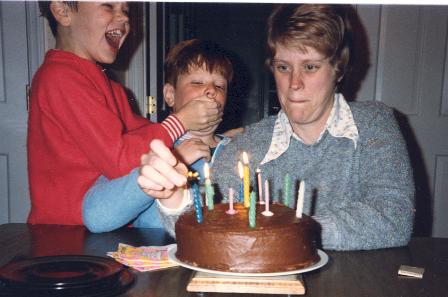
In 1981 when Aaron was 6 years old, my friend Debbie Wetzel and I drove to Louisville, KY to hear Wolf Wolfensberger give a presentation on “Normalization” or “Social Role Valorization” as he renamed it.
Like many parents before us, this philosophy changed our whole way of looking at our children and their futures.
As Debbie said about her daughter, “Jenni is not going to lead her life wrapped up in cotton and stuck on a shelf. She is going to have as normal a life as possible.”
On the ride home we also talked about what this new way of thinking was going to mean for us as mothers and advocates. We knew our lives were forever changed. The segregated services that were currently our only options were no longer acceptable. We would no longer allow our young children to get on segregated busses taking them an hour-and-a-half across town to segregated schools and handicap-only recreation programs.
When I got home I outlined the following plans that were ambitious and I knew (based on what we were currently fighting with our school district) maybe impossible to achieve.
The dream plans were based on what I had just learned about normalization and compared my dreams for Aaron, age 6, my son with the label of autism and developmental disabilities and Tommy, age 4, with the label of typicalness.
The concept of building community and normalized environments set the course of my life.
In part 2 and 3, I will be showing you how this 1981 dream evolved. Remember the language is from 1981 when we talked with words like retarded and group homes. This will evolve too.
1981 Dream Plan for Aaron
Aaron will be educated in a public school with his non-handicapped brother and neighbors. He will have a functional curriculum (see related post) which looks at his needs in his life spaces (vocational, leisure/recreation, domestic, general community functioning). His out-of-school activities will evolve around his family and his own friends, interests and talents. He will be in age-appropriate settings: elementary school ages 5-10; Jr. High ages 11-13, Sr. High ages 14-21, job in the community 21+. He will begin vocational training now, at age 6, so he will be able to perform the job. (If he isn’t able to be a dishwasher, then he can be a dishwasher’s helper, etc… there is some job he will be able to do with success.) At the appropriate time, Aaron will move to a group home to live with others his age. Though dependent in many ways, Aaron will have self-esteem and confidence in the things he does and be a contributor to his family, his extended family, and society.
1981 Dream Plan for Tommy
Tommy will be educated in a public school with his handicapped brother and neighbors. He will have a functional curriculum which looks at the needs in his life spaces, (academic, vocational, leisure/recreation, domestic, general community functioning). His out-of-school activities will evolve around his family, his own friends, interests, and talents. He will be in age-appropriate settings. He will make a career choice and pursue training (vocational, university, apprentice…). At a time he decides is appropriate, Tommy will move to his own home, probably marry and begin his own family. He will have self-esteem and confidence in the things he does and be a contributor to his family, his extended family and society.
Bengt Nirje a leader in the Swedish parent movement expressed it best:
Normalization means…
a normal rhythm of the day.
You get out of bed in the morning, even if you are profoundly retarded and physically handicapped;
You get dressed and leave the house for school or work, you don’t stay home;
In the morning you anticipate events, in the evening you think back on what you have accomplished;
The day is not a monotonous 24 hours with every minute endless.
You eat at normal times of the day and in a normal fashion;
Not just with a spoon, unless you are an infant;
Not in bed, but at a table;
Not early in the afternoon for the convenience of the staff.
Normalization means…
a normal rhythm of the week.
You live in one place, go to work in another, and participate in leisure activities in yet another.
You anticipate leisure activities on weekends, and look foward to getting back to school or work on Monday.
Normalization means…
a normal rhythm of the year.
A vacation to break the routine of the year.
Seasonal changes bring with them a variety of types of food, work, cultural events, sports, leisure activities.
Just think…we thrive on these seasonal changes.
Normalization means…
normal developmental experiences of the life cycle.
In childhood children, but not adults, go to summer camps.
In adolescence, one is intersted in grooming, hairstyles, music, boyfriends and girlfriends.
In adulthood, life is filled with work and responsibilities.
In old age, one has memories to look back on, and can enjoy the wisdom of experience.
Normalization means…
having a range of choices, wishes, desires respected and considered.
Adults have the freedom to decide where they would like to live, what kind of job they would like to have and can best perform.
Whether they would prefer to go bowling with a group, instead of staying home to watch television.
Normalization means…
living in a world made of two sexes.
Children and adults both develop relationships with members of the opporite sex.
Teenagers become interested in having boyfriends and girlfriends.
And adults may fall in love, and decide to marry.
Normalization means…
the right to normal economic standards.
All of us have basic financial privileges and responsibilities;
Are able to take advantage of compensatory economic security means, such as child allowances, old age pensions, and minimum wage regulations.
We should have money to decide how to spend, on personal luxuries or necessities.
Normalization means…
living in normal housing in a normal neighborhood.
Not in a large facility with 20, 50, or 100 other people because you are retarded;
And not isolated from the rest of the community.
Normal locations and normal size homes will give residents better opportunities for successful integation with their communities.
W. Wolfensberger; B. Nirje; S. Olshansky; R. Perske; and P. Roos, The Principle of Normalization in Human Services (Toronto: National Institute on Mental Retardation, 1972).
Recently Anne McDonald died, her story Annie Coming Out told of what it was like to live in an institution–not normal environments–where you were only seen as a group, never an individual (see related story).
If you are interested in more information about the history of people with disabilities, institutional settings and/or the parent movement check out Parallels in Time I (click here) and II (click here.)
Comments:
Have you ever gone to a lecture or workshop and come out a different person? Do you agree with the principle of normalization? Can a person with and without a disability both lead normal lives?
We had a great response to reformating the historical videos into segments for YouTube. We are creating a plan for moving forword. As we get news, I’ll pass it on. Thanks to everyone who so generously contributed in any way to this important project.
The Inclusion and Disability Rights Movement has come a long way, yet we have so much farther to go.
Adapting: Becoming a Star
Ed Roberts often joked that in the first 14 years of his life he was “just an ordinary kid.” He was more interested in sports than in school work and wanted to be a professional baseball player when he grew up. That all changed.
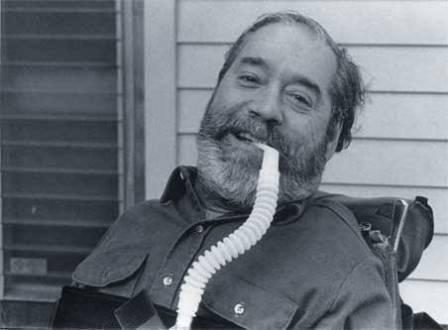
In 1953, before the vaccine, Ed contracted polio. Overnight he became paralyzed from the neck down and required an iron lung, which he used the rest of his life.
One of Ed’s greatest talents was being able to look at a situation, and ADAPT.
Ed decided a baseball career was out, and became a straight A student in High School.
When all the students stared at him, he decided this was an attitude problem. Instead of being embarrassed, this was how it must feel to be famous. In time, he reframed the whole experience, adapted, and decided he would pretend to become a famous movie star.
Indeed he did become a star. How fitting we are now trying to get his video on YouTube. I think he would get a bang out of that.
Stares into Stars
This would also be a good tip for people who are being stared out. Parents, Caregivers, Teachers could all adapt this strategy and help “reframe” those stares into stars!
When Ed Roberts got Polio, (1952) he was quarantined and had to listen to his classes over the telephone. Think of the differences.
Skype would have been amazing to him.
When Ed returned to school after missing almost two years of school, he felt like a stranger. Not only had he changed physically, he was now paralyzed, but he carried the stigma of “polio” and having a “Quarantined” sign on his front door.
At 16, Ed had to start his life and start making friends all over again. Plus, with the stigma of “polio” people were afraid of him and he looked so “different.” If the students could have seen him over “Skype” they would have seen him evolve, and gradually they would have adjusted to his new learning style and physical appearance. It would have been a learning experience for all of them.
It’s nice when students send get well cards, but including the student on Skype shows another dimension of caring.
BTW: home with Skype is the least restictive environment for this child at this time.
The new Technology Act will make other learning opportunities available for people of all ages. Who knows what the future may hold.
Your Turn
Any other tips for reframing embarrassing situations Stares into Stars? Any other uses of technology you would recommend? What would you want if you had to miss school for a long time?
In my class, “Introduction to Exceptionalities,” we read an article by Paul Longmore about the social construction of disabilities. The point being that the traditional “medical paradigm” points the disability finger at the person– they are defective and need to be fixed. The new paradigm of “social construction” puts the focus on the culture/society as the ones who need the fixing.
We are the culture, we are the society. And, through the courts, the legislature and individual everyday advocacy we help move society toward inclusion or back toward segregation and the medical paradigm.
Paul, like Ed Roberts, also had polio as a child. Our class watched a video on YouTube where Paul praised Ed Roberts. It reminded me of this post I wrote on the first Ed Roberts Day in California and challenged me to be courageous and follow the examples of both Ed and Paul.
And for what it’s worth, not one student in either of my classes had ever heard of Jerry Lewis. I thought that was a hoot!
Ed Roberts | “Be Extraordinary!”
In the United States we celebrate the birthdays of great civil rights leaders. Two of them are Martin Luther King and Ed Roberts. Most Americans know of Dr. King’s achievements but few know of Ed Roberts, the “Father of the Independent Living Movement” for people with disabilities.
Edward Roberts' Day Jan. 23, 2011
Ed Roberts Honored on his Birthday, Jan. 23.
California is the first state to officially designate January 23, 2011 as Ed Roberts’ Day. This is an opportunity for the media, public and private citizens to learn about Ed Roberts and the 50 million Americans living with disabilities.
But this day is about more than celebrating the life of a great American and pioneer in the civil rights movement of people with disabilities. This is a day to embrace Ed Roberts’ challenge to “Be Extraordinary!”
An Ordinary Kid Transforms
Ed Roberts often joked he started his life “just an ordinary kid” who was more interested in sports than school work. That all changed.
In 1953, when Ed was fourteen, he contracted polio. Overnight he became paralyzed from the neck down and required an iron lung, which he used the rest of his life.
One of Ed’s greatest talents was being able to see the possibilities, and adapt. When Ed got comfortable with his new body, he figured a baseball career was out but he knew he could still use his mind.
Ed became an Advocate for Himself and Others.
His mother, Zona Roberts, listened and helped him advocate for his own rights. When a high school administrator threatened to deny him a diploma because he couldn’t take physical education and driver’s education, Ed appealed to the school board and won.
He learned sometimes you adapt, but other times you fight discrimination and stand up for justice and equality.
When he entered the University of California at Berkeley (UCB), the newspaper ran an article saying, “Helpless Cripple Enters UCB.” Others might think he was a “helpless cripple,” but Ed knew better.
When physical barriers, like steps, prevented him from entering buildings, and other students were losing critical support services, Ed helped organize a protest which established the first student-led disability support services program at a university.
Ed got his BA and MA in Political Science. He finished all the coursework for his Doctorate (ABD) and taught at UCB for six years.
Ed Roberts paved the way for thousands of students with disabilities to go into higher education.
Ed married his college sweetheart and despite the medical doctors saying it was impossible, they had a beautiful son who was the pride of Ed’s life.
Ed Roberts the “Father of Independent Living”
Who Decides? The Birth of Self-Determination.
In Ed’s life, the dominant cultural view of people with disabilities was based on pity, charity, “better off dead,” and segregation. These attitudes marginalized the voices of people with disabilities and made them invisible in the culture. Ed met people who thought he belonged in an institution “with his own kind.”
He believed people with disabilities were “People First” who could speak for themselves and tell you what they liked, disliked, wanted, and needed. Instead of discrediting their knowledge, Ed and the Disability Rights self-advocates raised their voices and demanded to be heard.
Ed Roberts created the paradigm shift from Pity and Charity to Dignity and Self-Determination.
Ed fought for the first curb cut. When the city bureaucrats asked, “Why do we need curb cuts when we never see people in wheelchairs on the streets?” Ed calmly explained that was circular logic. This conversation was repeated in cities all over the country until the passage of the American’s with Disabilities Act (1990) required accessibility as a civil right.
Accessibility was more than just curb cuts. Ed worked for access to technology, transportation, jobs, voting, housing, inclusion in regular schools and every part of life. With Olmstead, he advocated to free people with disabilities from nursing homes and institutions.
Universal Design
Universal Design changes the attitude of charity. Accessible buildings, transportation systems, learning and education philosophies, communication and technology were NOT just for “poor cripples” they were for everyone.
Ed also understood basic dignity and civil rights were for everyone. After all, people with disabilities cross all ethnic, race, gender and class lines. He met with leaders in the Native American, African American, Women, Seniors, and Hispanic movements.
He created a common dialogue arguing, “All men (and women) are created equal”–including those who use breathing machines, wheelchairs, Braille and communication boards.
When those first curb cuts were made, all of a sudden it was easier for people with baby strollers, bikes, people who were elderly and people making deliveries….
This was controversial because many people don’t like to consider they can join the ranks of the disabled in a moment. But again, Ed taught us having a disability is NOT the end of the world. Disability is just a part of the human condition.
People with disabilities were taught self-help skills and personal responsibility. They learned to not be victims or eternal children, but rather to be adults and take control of their lives.
Gov. Jerry Brown appointed Ed Roberts Director of the Department of Rehabilitation for the state of California in 1975. Ed supported the passage of Section 504 of the Rehabilitation Act and saw many of his ideas implemented. He served until 1983 when he co-founded the World Institute on Disability. He traveled the globe and developed a world-wide movement of, with and for people with disabilities. Ed Roberts really did change the world (as well as many airlines).
Ed died in 1995 from natural causes but his legacy continues with his son, his friends and a thankful nation. The lives of people with disabilities and ALL of us are better because of his spirit, vision and life.
In Ed’s Own Words:
Text of Remarks by Ed Roberts at Section 504 Sit-in Victory Rally in San Francisco on April 30, 1977.
“We have begun to ensure a future for ourselves, and a future for the millions of young people with disabilities, who I think will find a new world as they begin to grow up. Who may not have to suffer the kinds of discrimination we have suffered in our own lives. But that if they do suffer it, they’ll be strong and they’ll fight back.
And that’s the greatest example, that we, who are considered the weakest, the most helpless people in our society, are the strongest, and will not tolerate segregation, will not tolerate a society which sees us as less than whole people. But that we will together, with our friends, will reshape the image that this society has of us.
We are no longer asking for charity, we are demanding our rights.”
Summary:
Ed Roberts was a pioneer for the civil rights of people with disabilities.
Like Martin Luther King, he had a Dream that celebrates diversity for people of all races, and abilities.
He helped us see the stigma and segregation of disability as meaningless—we are all either “disabled, or the yet to be disabled.” We are all part of the human family and while we need each other, we each want self-determination in our own lives.
The journey toward inclusion continues as we replace the physical and attitudianal barriers of discrimination, segregation and the charity model with inclusion, universal design and civil rights.
Ed was extraordinary.
Be Extraordinary!
Ed Roberts couldn’t walk, couldn’t feed himself, couldn’t dress or shave himself. He couldn’t even breathe by himself. Yet look what he accomplished.
Ed continues to challenge us to see ourselves as perfect –just the way we are. He continues to inspire us with his ideas to Be Extraordinary.
We really have no excuses.
What can YOU do today to spread the word about Ed Roberts and the civil rights movement of people with disabilities?
What can YOU do today to help change physical and attitudinal barriers for ALL people?
Will YOU accept his challenge to also Be Extraordinary ?
Keep Climbing: Onward and Upward
All the Best,
Mary
Comments:
Please share your thoughts. Big or small, each action you take will spread the word.
Please take a minute and visit the MN Governor’s DD Planning Council’s tribute to Ed Roberts. See videos of Ed’s presentations.
Wretches and Jabberers is a movie about Tracy Thresher and Larry Bissonnette, two men with autism, as they embark on a global quest to change attitudes about disability and intelligence while promoting the importance of presuming competence.
Wretches & Jabberers opened nationwide on April 2nd in 10 U.S. cities: New York City, NY; Los Angeles, CA; Washington, DC; Philadelphia, PA; Kansas City, KS; San Diego, CA; Denver, CO; Dallas, TX; Columbus, OH & Miami, FL. Six of the 10 cities SOLD OUT, while others were at near-capacity!
If you can’t attend the movie, perhaps you can still support Autism Awareness Month and The Autism Society.Click here to BUY THE SOUNDTRACK ON ITUNES I have also heard the Soundtrack is available at Barnes and Noble Stores.
The soundtrack features 20 original songs written and produced by J. Ralph in collaboration with: Antony, Devendra Banhart, Paul Brady, Bonnie Bramlett, Vashti Bunyan, Martin Carthy, Judy Collins, Lila Downs, Vincent Gallo, David Garza, Ben Harper, Scarlett Johansson, Nic Jones, Norah Jones, Leah Siegel, Carly Simon, Stephen Stills, Ben Taylor & Bob Weir.
Carly Simon: The Letter
“I’ve spent a lifetime trying to get in touch”
LYRICS: The Letter
Did I tell you
Sorry it took so long
I’ve spent a lifetime
Trying to get in touch
Just wrote you a letter
For the very first time
I mailed it to you
Did it arrive
I keep a diary that no one can see
It’s got no gold key or paper at all
I filled those pages through all my ages
With all that I’ve seen and all that I’ve learned
I wrote to tell you
Today I got a dog
I named her Hazel
Just like your mom
She loves swimming around
Out there in the fog
She’s really happy
She reminds me so much of you
I keep a diary that no one can see
It’s got no gold key or paper at all
I filled those pages through all my ages
With all that I’ve seen and all that I’ve learned
Check out what people have been saying about Wretches & Jabberers:
Gerardine Wurzburg’s Wretches & Jabberers may be the best film you’ll see on a subject you probably want to avoid — although you’d be wrong about that. Yes, it’s a documentary about autism but it’s also nearly perfect in doing what an advocacy doc should do: show rather than tell, entertain rather than preach. If this is your first exposure to the world of autism, it will be an eye opener. Kirk Honeycutt, Hollywood Reporter
When Tracy Thresher has something to say, he uses his right index finger – and a special computer that gives voice to what he types. Hunched over the device, he begins. Tap, tap, tap. Tap, tap, tap. Tap, tap, tap, tap…. Autism silences the 43-year-old Vermont man. He doesn’t speak. But he has a message for the world about how people should think of people like him. So he taps it out.”To think intelligence, even if you see wacky, goofy behavior. We are simply intelligence, shown in a different way,” comes the robotic voice, broadcast out of his computer… John Curran, Associated Press
Wretches and Jabberers Explodes Myths About Autism.
The new documentary Wretches & Jabberers follows the journey of two autistic men—Larry Bissonnette, 52, an artist; Tracy Thresher, 42, an advocate—as they travel the world, attempt to banish the myths about autism, and reveal its global face. PARADE spoke to the pair behind the film—Academy-Award-winning director/producer Gerry Wurzburg and co-producer Douglas Biklen, Dean of the School of Education at Syracuse University. Joanne Chen, Parade Magazine
Wretches and Jabberers is a buddy movie, a road trip movie and a moving adventure. But this new film is different than your typical mainstream fare. The documentary stars two autistic friends and advocates who do most of their communicating through typing. The story follows Larry Bissonnette and Tracy Thresher, as well as their assistants Pascal Cheng and Harvey Lavoy, as they travel around the world, meet other autistic people, and advocate for autism rights. John Hockenberry “The Take Away Radio Show.”
And Larry’s Blog with more of his thoughts and stories.
Summary:
I can’t wait to take Aaron to see the movie this Saturday. As an added bonus, the new Director of the Day Program for Goodwill/Easter Seals is going to go with us. I have to say, this is the first time since Aaron graduated from High School that I am hopeful Aaron will begin to communicate again with facilitated communication (FC).
I am reminded of the quote from the early days of FC:
“Not being able to speak, is not the same as not having anything to say.”
But I’m preparing myself.
Aaron has not used his communication system in over 10 years. Ever since his facilitator moved away and …. long story.
I have been so moved by Larry and Tracy, my faith in Doug Biklen, the W&J trailer, the songs from the Soundtrack and the pre-publication publicity.
Sometimes a movie, a song, a story about hope and a lifetime of endurance is so moving it can take your words away: “Being able to speak, doesn’t mean you will find the right words.” Yep, I’m one of the Jabberers.
Keep Climbing: Onward and Upward
“When we stop to lift one another up on the climb, we all reach a higher place.”
All my best,
Mary
Parts of this were quoted from the Wretches and Jabberers Newsletter: Volume 8 (April 2011)
Comment:
Please add your voice to this story:
What phrase in the song, The Letter, did you find the most powerful? Will you see the movie, buy the Soundtrack, or otherwise support Autism Awareness month? Can you imagine what not being able to speak with words must be like? Anything else you want to add?